
Pythagoras’ theorem has been an equation of great significance and is well-known by everyone from school children to scientists, architects, and engineers. The first time I encountered the equation was in elementary school while learning about right angle triangles. In this equation, Pythagoras of Samos stated that in every right-angled triangle, the hypotenuse must equal the sum of the squares on the two other sides. Sounds simple enough, doesn’t it?
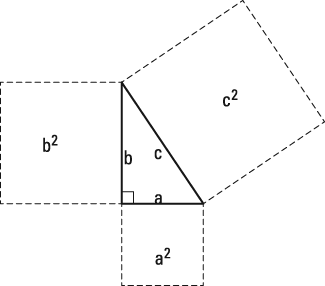
The quirkier aspect of the equation kicks in when one asks why the same statement is not true for numbers that are cubed, or to the fourth power, and so on to infinity. And if it isn’t true, how can we prove it? This line of questioning leads us to Fermat’s last theorem.
Formally, Fermat’s last theorem states that no three positive integers a, b, and c satisfy the equation an + bn = cn for any integer value of n greater than 2. The story of Fermat’s last theorem is deeply linked with the history of mathematics and has been at the crux of major developments in the field of number theory. While the equation finds its origins in the mathematics of ancient Greece, it was in the notes of French mathematician Pierre de Fermat that the problem was constructed in the form as we know it today.
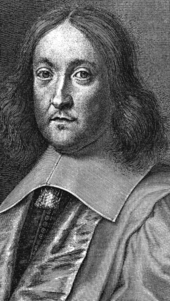
Alongside Rene Descartes, Fermat was one of the two leading mathematicians of early 17th century and made significant contributions to the development of calculus, optics, and also independently invented analytic geometry in the study of conic sections. Of his contributions to number theory, in short, Fermat essentially created the modern theory of numbers and was well-known for his ability find proofs for many theorems. Fermat would go on to propose a supposed proof, before his unfortunate passing, of the very same theorem that he would become widely known for.

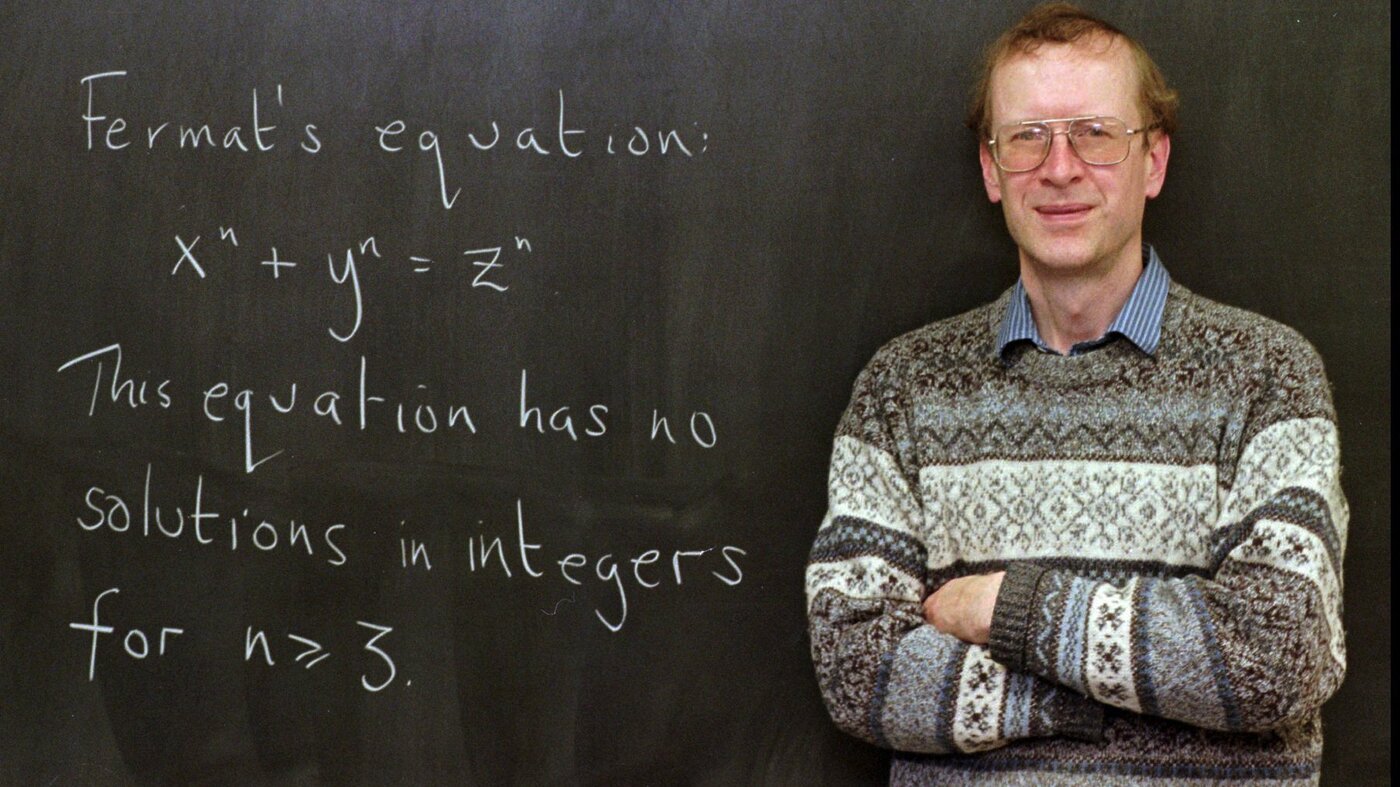
Fermat’s Last Theorem would continue to captivate the minds of mathematicians for several centuries and it would do the same for a young boy named Andrew Wiles, then 10 years old, when he first came upon the problem. Wiles would continue to be inspired by the problem throughout his life, and several years later in 1994, as a professor of mathematics at Princeton University, he would go on to become the first person to provide a definitive proof of the equation.
Simon Singh’s Fermat’s Engima describes the rich history of Fermat’s last theorem while providing an insider perspective on Andrew Wiles’ journey in tackling the problem in a seminal account of one of the most dramatic events of the century. The world’s greatest problem, as it is known, takes center-stage alongside a story of epic drama and spirit. One could even liken it to a detective story as we follow Wiles’ tireless efforts to discovering the proof.

I originally came across Fermat’s Enigma in 2005 when I was in high-school. I never had the chance to complete the book nor appreciate its content back then, thanks to my non-existent aptitude for mathematics. It has been refreshing to sink back into the book now several years down the road, and read it to completion. While the book is written for a larger, popular audience, Singh spares no expense with the mathematics and provides for illustrative examples on the work of Wiles’ predecessors from the ancient Greeks to the Renaissance period, and all the way down to the past century en route to making the audience feel like they are assisting Wiles in solving the problem.
Fermat’s Enigma is a wonderful account of a mathematician’s tireless efforts in pursuit of the holy grail of mathematics. It is a story that is filled with sacrifice, spirit, emotion, and some awesome mathematics. While it is often argued if there was any value to solving Fermat’s theorem, it is undeniable that Wiles’ work has led to greater developments in the field of mathematics and number theory in lieu of solving the problem itself.
For those wishing to dab a little into some mathematical history and just about enjoy an entertaining and thoughtful read after a long day, Fermat’s Enigma is a must.


One thought on “Book Review: Fermat’s Enigma – In pursuit of a proof”