
The first I heard of Carl Sagan was in high school when one of my professors suggested science writing as a prospective career path. He would mention his admiration for Sagan’s ability to dissect scientific concepts and communicate them to his readers in an eloquent manner. He would suggest I follow in his footsteps and study his works if I ever wished to combine my love for writing with my love for science. I didn’t think too much about it then.
Several years later, after slogging through a not so memorable undergraduate degree in Astrophysics, I became demotivated about science in general. My love for science had been cultivated by the simple relationship of asking questions and seeking answers all the while guided by my curiosity about the world’s mysteries. Somewhere along the way, amidst all those reports, exams, and grade-chasing, I had lost my passion for science.
It was around this time I came across Cosmos: A Personal Voyage during an ordinary visit to the public library following my graduation. The name Carl Sagan glaringly stood out along the line of DVD documentaries. I would go on to watch the documentary (as well as read the original book), reignite my passion for science, and a few years down the road, complete a MSc. Physics degree. Now as I pursue doctoral studies while engaging in efforts toward a career in science writing, I couldn’t help but revisit Sagan’s work which has been an inspiration throughout.

The word cosmos was used as a term by the Greek philosopher Pythagoras to describe the order of the universe.[1] Sagan’s work reflects that very same order as he basks in the grandeur of the universe and takes us along a nomadic experience wandering as explorers through space and time. Sagan can be credited for setting the foundations for popular science writing and providing a successful template at it with Cosmos. The book and its contents flow more like poetry or an introspection of the universe around us with a specific focus on the rich, and intricate details that have been lost in our advances as a civilization throughout history.
The Cosmos is all that is or ever was or ever will be. Our feeblest contemplations of the Cosmos stir us – there is a tingling in the spine, a catch in the voice, a faint sensation, as if a distant memory, of falling from a height.
Carl Sagan
Sagan makes it clear that the beauty of the universe originates from our inherent lack of knowledge about it. It is a point that he references repeatedly throughout the course of his documentary as well as the book and uses it as a fulcrum upon which he is able to emphasize the frail and unique nature of human existence on Earth. It is a theme that Sagan carries forward in several of his other works as well, and most notably in Pale Blue Dot.[2]
Carl Sagan today is best known as a science popularizer and communicator. As a writer, Sagan set a high standard for science communication and popularization. While adored by the general public, Sagan had his fair share of critics. His reputation within the scientific community was polarized.[3] Some found his work to be fanciful and lacking the rigor expected of scientific publications but with time, Sagan’s brand of popular science was recognized as beneficial to science as a whole.[3]
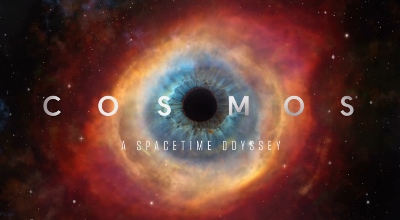
Cosmos: A Personal Voyage was first released in 1980. Neil deGrasse Tyson’s Cosmos: A Spacetime Odyssey has served as a wonderful spiritual successor to the original series.[4]
Despite the 40 year gap and new discoveries and developments within the fields of astronomy and cosmology,1 Sagan’s work is relevant even today if not for the science that remains factually correct but also as a template for science communication and its significant role in advocating science for the public.
Rising developments in modern telecommunication systems has made the world a lot smaller, and the need for open communication even more relevant. As a student of science, one of the biggest problems scientists face is the danger of tunnel vision where by focusing so hard on what we wish to discover about the mysteries of the universe we completely neglect the importance of communicating our thoughts and ideas to others in the field as well as the general public.
Sagan’s Cosmos, for me, is a wonderful reminder of the continuing need for science to be a communicative enterprise for the proliferation of scientific knowledge.
1 Since Cosmos, we have discovered a lot more about our world and the universe. A few such interesting tidbits include topics such as exoplanets, Galactic structure (Milky way is a barred spiral not a spiral), an infinite and open Universe as opposed to Sagan’s closed universe, planetary demotion of Pluto, the Kuiper Belt, changes in the estimates for alien life, evolution on Earth, developments in the Hubble Space Telescope, gravitational waves etc.
References
[1] https://plato.stanford.edu/entries/pythagoras/
[2] https://bookseriesinorder.com/carl-sagan
[3] Davidson, Keay (1999). Carl Sagan: A life. John Wiley & Sons.
[4]https://www.huffingtonpost.ca/entry/neil-degrasse-tyson-cosmos-god-alien-life-multiverses-interview_n_4790408?ri18n=true


Thanks for sharing your personal journey and highlighting that having knowledge is limited in value unless we find a learner-centred, practitioner-centred way to communicate and share our knowledge to others in a way that they can understand and relate to.
LikeLike