
The word “science” can mean different things to different people. To the general public, it can be a callback to the white lab coats, and microscopes that complete the classic trope of a “mad scientist.” To a student, it can be an unfriendly reminder of that incomprehensible fat textbook in the corner of the room. To the scientist, it can be just another day at work staring at the equations on the blackboard or tinkering in the lab.

All these examples reflect aspects of science which is truly a multi-faceted endeavor. Wikipedia states,
Science (from the Latin word scientia, meaning “knowledge”)[1] is a systematic enterprise that builds and organizes knowledge in the form of testable explanations and predictions about the universe.
But for me, science has always been the simple act of swinging from one branch of questions to another about the surrounding world, and it remains so to this day. Science is the motion towards questioning, and interpreting the mechanics behind the nature of the world around us.
My earliest encounter of such an experience was during my childhood when under a starry night sky I had asked my father about the nature of the stars overhead.
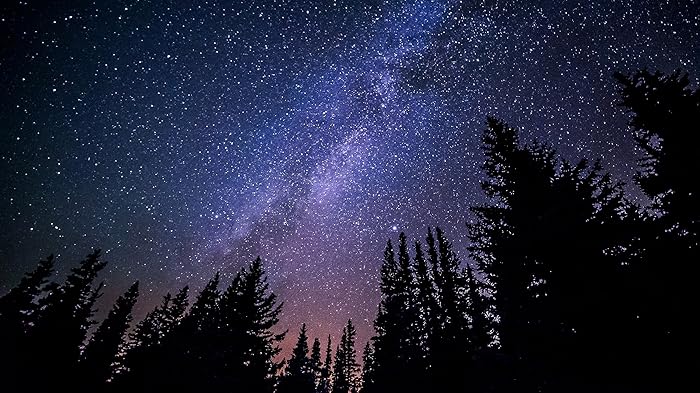
My father provided me an answer to the best of his knowledge while encouraging me to continue asking questions and seeking answers. That set off the spark in what has now become a lifelong adventure in my “answer-seeking” of the world around me. The deeper I delved in my questions, the more I needed to learn.
Education is both a tool and a faculty of knowledge. My experiences through secondary and post-secondary education molded my perception of science as a discipline of inquiry. Climbing the ladder of experiments from middle school and high-school labs to undergraduate studies and beyond, the rigorous nature and reality of science became evident. Popular science books often gloss over the crisscrossing, exhaustive channels of theoretical and experimental work that lead to the formulation of the fundamental laws of nature. It wasn’t until I had my go at scientific research, at its most natural form, that I understood science didn’t evolve from a basic functional dependence of question and answer. The inquisitive nature of science makes it a subtle affair where an answer may lead to further questions or the question may itself serve as the answer. So how do we communicate something that is so inescapably relative?
We ground it in the language of mathematics. Mathematics is the language of science, and describes the relationship between objects. Science, as a discipline, aspires to be a description of the relationships between the physical phenomena we observe, and as such is based on the foundations set by the formal framework of mathematics. From this formal framework is developed a consistent method of performance that is now at the heart of how science functions: the scientific method.
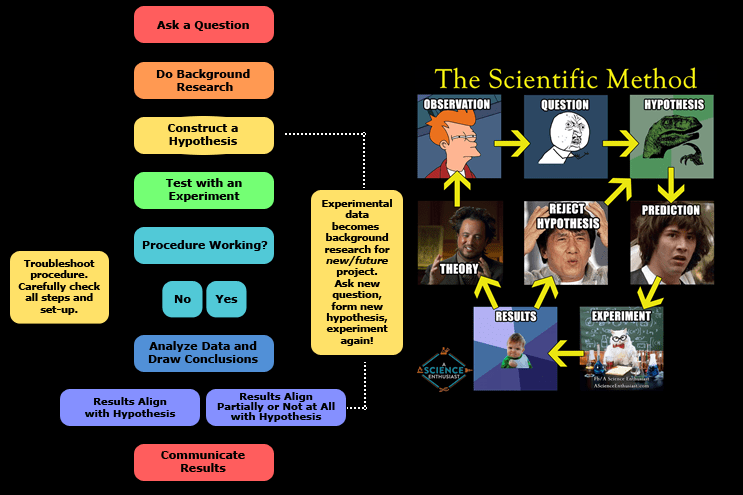
It is important to note that the scientific method does not define science but is a framework that guides scientific research. Science is guided by an intrinsic notion towards verifying and validating our interpretation of natural phenomena through the language of mathematics.
It is equally important to recognize that mathematics, as the “language” of science, does not often translate easily as a means for the “communication” of science.
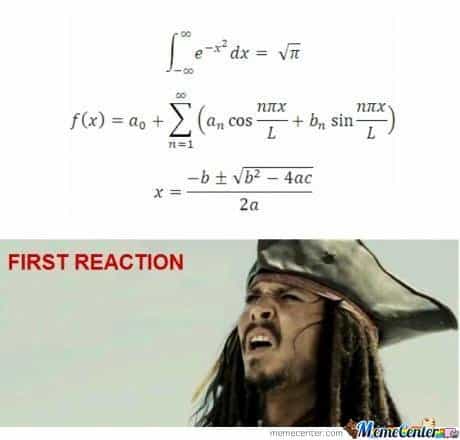
Thus, it is necessary to educate as well as improve our abilities to communicate and translate our scientific knowledge to the general public while simultaneously being careful not to over-generalize or lose sight of the fundamental message. This is a difficult enterprise as science is filled with subtleties, and the essence of these subtleties can be lost easily. It remains a persistent problem in the field, and has signified the growing importance of science writing as a means to bridge the gap between the general public and the scientific community.
Having said this, modern science consists of three major branches: the natural sciences (physics, chemistry, biology), the formal sciences (logic, mathematics), and the social sciences (economics, sociology, and psychology). The inherent nature of the formal sciences does beg the argument if they constitute a science at all as they do not rely on empirical evidence. Furthermore, the degree to which mathematics is used as a tool may vary from one branch of science to another. The application of the existing scientific knowledge for practical purposes leads to yet another possible branch of applied sciences including engineering and medicine. Discussions concerning the foundations, methods, identity, and implications of science now constitute a sub-field of philosophy known as the philosophy of science.
So, what does this all mean? What inherently IS science? Honestly, I don’t have an answer. My journey has just begun after all! But, I would like to believe that science is similar to a gigantic mural of the universe and one that continues to expand in breadth and in depth. What makes this particular painting unique is governed by its intrinsic nature for change, a characteristic that makes it all the more beautiful and personal. As such, like any other artist would say, it is what you take it to be and for me science is nothing more than an endless list of interesting questions ingrained into every facet of the world that I experience on a daily basis.


One thought on “Perspective: What is Science?”