
Nearly everything in our daily lives, from our laptops, refrigerators, tv, and the internet are governed by the principles of energy that dictate our universe.
We have learned to harness energy in many forms (we have gotten real good at it too), From fire in prehistoric times, to steam in the steam age, to fossil fuels since the dawn of the industrial age, and the current shift to renewables and clean energy. There remains one more means toward generating energy to sustain humanity and it involves harnessing the power of the sun. Now, we may be one step closer to achieving this goal.
But Before That, Some Context…
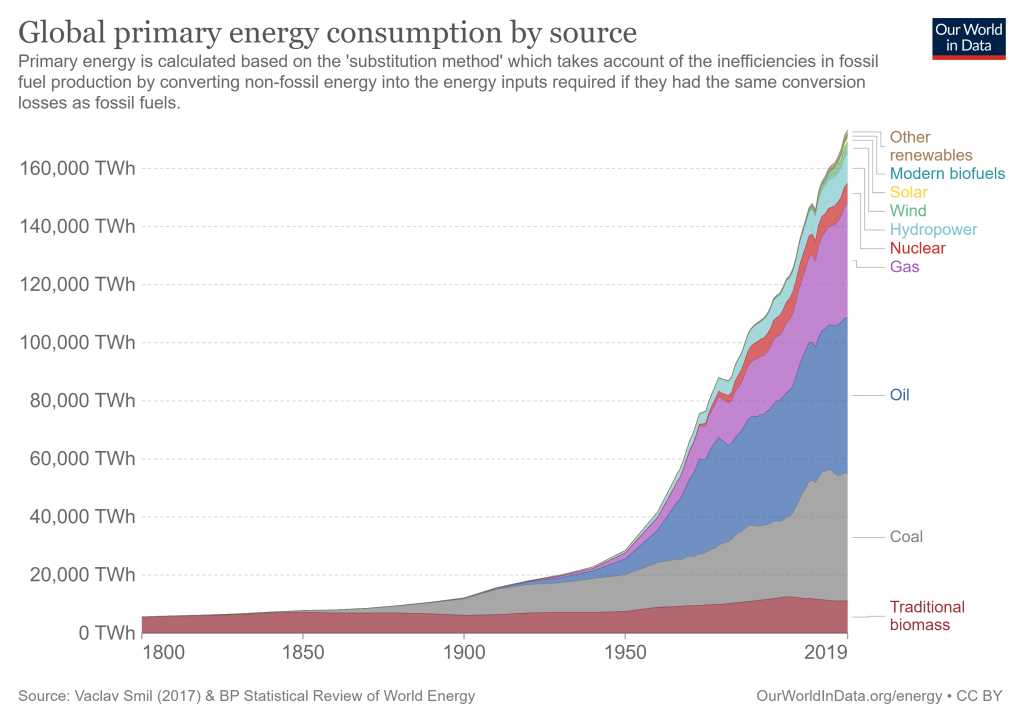
Fossil fuels like coal, oil, peat, and natural gas have been the convention for many years in powering our planet’s global energy expenses. This is largely due to their high energy output and availability. Unfortunately, the use of fossil fuels has led to detrimental effects on the environment such as the elevated production of carbon dioxide in our planet’s atmosphere. Alternative sources of energy, in the form of renewables, offer hope though sustainability remains in contention.
Our sun has been here for a long time and was born nearly 4.6 billion years ago. It is the largest object in the solar system and accounts for 99.8% of its mass. One million Earths could fit inside the sun. NASA states that to match the energy output of the sun, it would require us to explode 100 billion tons of dynamite every second.
That’s a lot of energy, and the sun achieves this through the process of nuclear fusion. We discussed a little bit about this in our earlier post where we explored the interior landscape of neutron stars. Nuclear fusion is a process where light atomic nuclei are brought together to make a heavier nucleus.

Hans Albrecht Bethe, a German-American nuclear physicist, discovered in 1930 that the sun and the stars in the universe were powered by this very same process. It wasn’t too long afterward, in the 1940s, that scientists began to research means to replicate nuclear fusion for global energy production.
The first instance of nuclear fusion was demonstrated on November 1952 in the United States with the hydrogen bomb. Unlike atomic bombs that are powered through nuclear fission, where a heavy atom is split apart into lighter parts, the hydrogen bomb involved a mixture of fusion and fission processes where a plutonium atom was split. The resulting high temperatures and pressures would then cause hydrogen atoms to fuse in a repetitive chain reaction releasing a tremendous amount of energy.
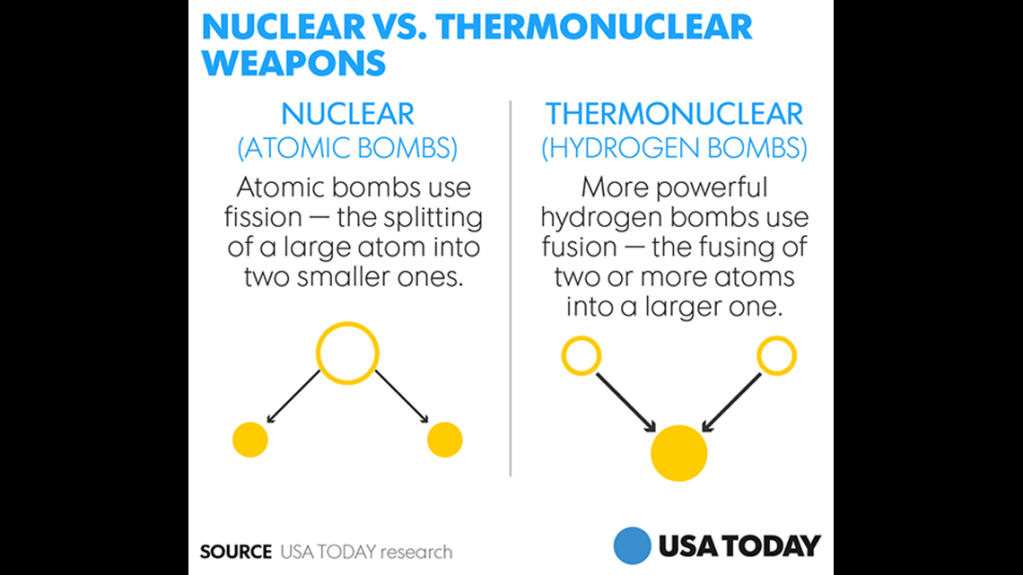
Hydrogen fusion is the fundamental reaction that powers the sun. Here, four hydrogen atoms come together to form a helium nucleus. The reaction requires a small amount of mass of hydrogen atoms but results in the expulsion of a large amount of energy as the atoms merge to form a helium nucleus. The sun is essentially a thermonuclear reactor in space. The challenge was to replicate these very conditions to initiate fusion reaction, observed in the sun, on our planet.
The Challenges
Over the last 50 years, the goal for sustainable nuclear fusion has met various complications. Scientists identified three major parameters crucial to the success of the experiment: temperature, time, and containment.
Fusing hydrogen atoms together required an extremely high amount of energy or temperature. The sun’s core temperature of 15 million degrees Celsius and its immense gravity helps overcome this energy barrier to achieve nuclear fusion. After overcoming this obstacle of temperature, the nuclei also had to be held together in close proximity and long enough for fusion to begin. To cap it all off, considering the high temperatures and pressures required for the process, a stable containment system was required.
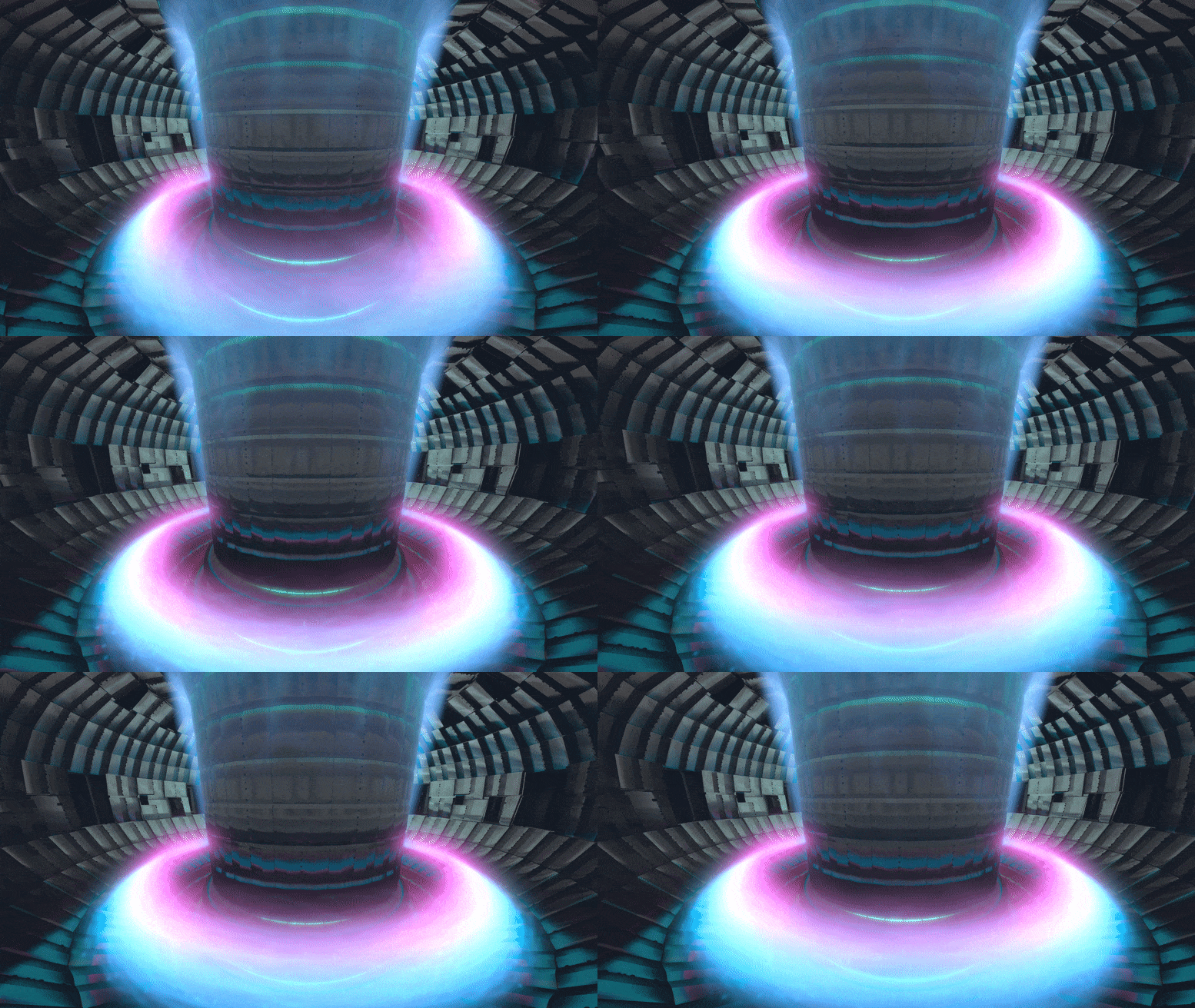
These problems set the precedent, in the 1940s, for the development of man-made nuclear fusion reactors. The earliest versions of these reactors were called tokamaks where hydrogen atoms were heated to extremely high temperatures to initiate fusion.
Fusion fuel on Earth consisted of isotopes of hydrogen such as deuterium and tritium, atoms with the same number of protons as hydrogen but different number of neutrons. Deuterium consists of one neutron and one proton, while tritium consists of two neutrons and one proton.
These isotopes would be heated to temperatures much higher than that observed in the core of the sun, up to 150 million degrees Celsius. This was to accommodate for the lack of gravitational forces that provide the high-pressure conditions for fusion in the sun.
By heating hydrogen gas to such high temperatures, the reactor sustains a plasma or a soup of ions and free electrons, enabling conditions for fusion. Powerful magnetic fields, generated by running electric current through heavy duty metal coils, were used to heat, contain, and help stabilize the reactions. The end goal was to obtain ignition, where the output of energy from the fusion experiment would be greater than the input energy to start the reaction.
However, scientists found fusion reactions to be extremely difficult to control, and for many years, fusion experiments failed to reach ignition. Until now, that is.
Achieving Ignition
Recently, the team at the National Ignition Facility (NIF) at Lawrence Livermore National Laboratory in the US have claimed the first fusion reaction experiment to achieve ignition. Unlike a tokamak, the NIF is an inertial confinement fusion reactor.
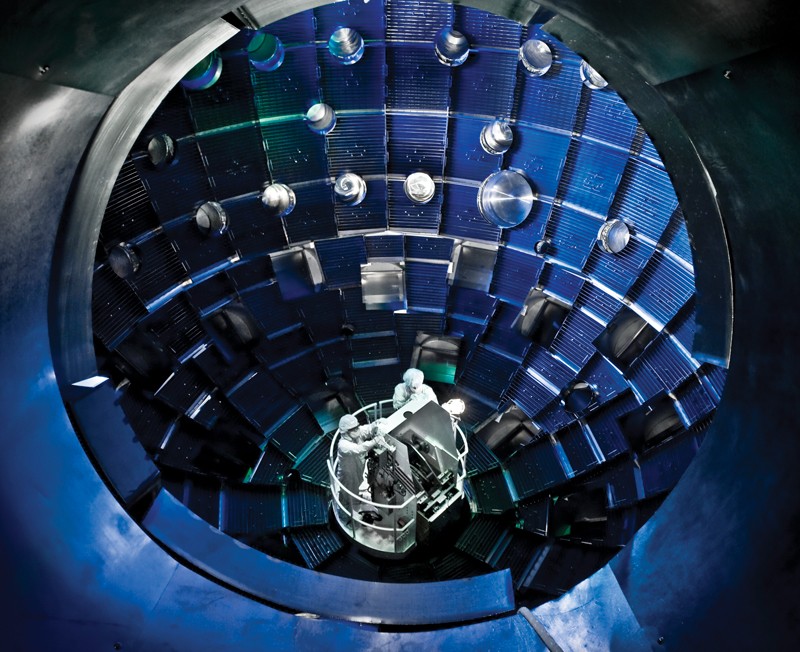
Instead of powerful magnetic fields, inertial confinement fusion uses high-powered lasers to heat up deuterium and tritium fuel pellets to extremely high temperatures. At the NIF, this high-powered laser is split and amplified into 192 laser beams, using arrays of mirrors within the reactor. These beams are then focused onto a gold cylinder housing thermonuclear fuel in the form of deuterium and tritium pellets. Once the beams strike the pellets, the hydrogen isotopes heat up, fuse, and generate helium nuclei, neutrons, and light. These helium nuclei, interact with the surrounding plasma, and initiate a self-sustaining chain reaction, by generating more helium nuclei and more energy. This is ignition.
In a landmark result, the team at NIF confirmed that their experiment in 2021 generated 70% of the power that was utilized to start the reaction identifying the onset of ignition and an energy output six times greater than the previous record. The importance of this accomplishment hasn’t been lost in the scientific community.
Although the NIF began its experiments in 2009, achieving ignition has been a long and arduous journey. Persistent fine-tuning of the facility, optimized target fabrication techniques, and precision lasers were identified as reasons for the recent success. Much remains to be done for the team at NIF, who must now analyze the outputs of the experiment and the possibility of reproducing the same results if not better. The challenges that lie ahead would require sustaining the fusion plasma for several months, and building a platform to accelerate the pace towards commercializing nuclear energy for power.
The Forecast Is “Sunny”
But, as things stand, the future looks promising. Due to the very nature of laser fusion, even the tiniest changes can reap extravagantly different results. It is now up to scientists to determine what those parameters will be but the prospect of building on the NIF’s success seems inevitable.
The holy grail for nuclear scientists, over the last 50 years, has been the controlled release of energy from a fusion reaction. The experiment at NIF is a preliminary but significant confirmation that ignition is possible. Now, in uncharted territory, scientists hope further success could be found toward breaking the barrier towards energy output in excess of the laser energy used to kick-start nuclear fusion.
If this were to be realized, nuclear fusion would provide an unlimited supply of energy for the world without concern for radioactive waste or contaminants that may pollute the environment. By recreating the environment seen in the sun’s core here on our planet, the scientists at NIF have not only opened a possible future for clean, and unlimited energy to sustain humanity but also the ability to probe the secrets of the stars, and the universe, in its most extreme states, in our own backyard.
References
[2] https://www.space.com/58-the-sun-formation-facts-and-characteristics.html
[3] https://www.nasa.gov/audience/forstudents/5-8/features/F_Violent_Sun.html
[4] https://en.wikipedia.org/wiki/Hans_Bethe
[5] https://www.livescience.com/53280-hydrogen-bomb-vs-atomic-bomb.html
[6] https://www.dummies.com/education/science/chemistry/nuclear-fusion-the-hope-for-our-energy-future/
[7] https://www.intechopen.com/chapters/64653
[9] https://lasers.llnl.gov/science/icf/how-icf-works
[10] https://www.nature.com/articles/d41586-021-02338-4
[11] https://phys.org/news/2021-08-major-nuclear-fusion-milestone-ignition.html


